
Do you struggle to identify your feelings?
Hint: they’re not all emotions
To reconnect with yourself, start with my feelings grid – incorporating emotions, nervous system responses and physical feelings. Built with neurodivergent brains in mind.
Reconnecting with your feelings is always possible – no matter how cut off from them you are right now.

Do you have a “go to” emotion?

Is there one emotion you feel more than anything else?
- Do you think of yourself as “an anxious person” or “an angry person”?
- Perhaps you default to feeling guilt or shame when something doesn’t go as planned?
- Or maybe you struggle to connect to feelings at all, and mostly feel some version of numb
In reality, you are experiencing a whole range of different feelings
But when you’ve never been taught to distinguish them, the signals can get extremely muddled:
- Overstimulation and social fatigue are often mistaken for anxiety
- Feeling unsafe can easily be misinterpreted as anger
- It can be hard to register your feelings at all until they become overwhelming
If you’re neurodivergent, like me, you’re more likely to have big feelings. And they’ve probably been repeatedly invalidated. Making it extremely hard to trust yourself, or even to feel safe paying attention to your inner world.
When you don’t know what you feel, you can’t effectively act on it
There’s a huge amount of information out there on how to manage feelings. You can find endless content telling how you to sit with your emotions or how to calm your nervous system.
But if you don’t know what’s going on inside in the first place, it’s impossible to know what to do about it. Anxiety management techniques won’t help if you’re actually overstimulated – in fact pushing through the “anxiety” is one sure way to make overstimulation worse!
Are you ready to enter your feelings era?
Recognising your feelings is a skill you can practice and build
The great news – evidence shows that a regular practice of checking in and attempting to identify feelings makes a tangible difference. This practice can improve both how clearly the signals come through, and how accurately we identify what they’re telling us.
Not all feelings are emotions…
…but, most tools out there to help identify feelings only include emotions. All those emotions wheels and lists out there are brilliant, but they don’t include the full landscape of inner feelings.
That’s where Feelings Unjumbled comes in! When I couldn’t find a feelings tool that included nervous system states and physical feelings alongside emotions I set out to create my own, and the feelings grid was born.
Different brains are different
What works for one person may not work for another. I won’t tell you to meditate in a certain way, establish a specific sleep regime or use any particular breathing technique (though I have access to lots of those I can recommend if I think they might help).
Instead, I encourage you to use a simple four step process to build a gentle practice of focusing your attention inwards. And to experiment with naming and acting on what you find there. That way, you build your own knowledge of how and when different feelings show up for you, and your own personal toolkit of what to do about them.
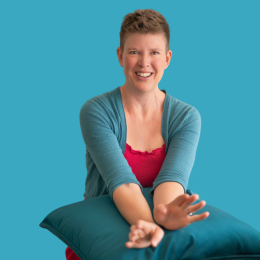
Hi, I’m Ellen!
My full emotional range used to be “anxious, not anxious, and excited”. Learning to identify what I’m actually feeling has been utterly life-changing for me! I became a coach to help other people on the same journey.
When I was diagnosed autistic shortly after receiving my coaching certification, so much fell into place. Now I build the tools I wish someone had handed me years ago.
What my clients are saying
The circle has given me the space to think about how I experience emotions and feelings in my nervous system

It has been validating to find that others have the same challenges that I do, and encouraging that there are ways to overcome them.
Importantly, it was tailored and not a “one approach fits all” environment.
I really appreciate that Ellen is so aware of these points and goes to such lengths to ensure that everyone got something meaningful from the experience, whatever their starting point and previous experiences.
I’d really recommend working with Ellen if you’re interested in experiencing your feelings more fully, especially as a late-diagnosed autistic / ADHD person. She really gets it.
The most noticing impacts was the shift in understanding the very real difference between nervous system responses and actual emotions

…as previously I have always treated these as detrimental personality flaws and shamed myself by invalidating the ‘size’ of the response.
[Now I stop] regularly to actually check in with my body rather than assuming (or convincing myself) I should be fine.
I would recommend [the Self-Attunement Circle] most highly!!
Particularly for those who struggle to identify their own feelings in order to take any action, and especially for those, like myself, who are caught in the alexithymic to self shame of percieved personality flaws, because the traditional feelings wheels don’t align with us or actually produce real understanding.
I feel calmer because I feel more able to identify my feelings generally

It has taken away a layer of anxiety. I can identify my feelings more accurately and in more detail and therefore know what to do to help me move through them and find reasons for them.
I have realised that I have not understood overwhelm in myself and have been ascribing emotions to what is actially overwhelm.
This is totally different to my previous understanding of what I thought I was feeling and why.
[Ellen was] calm, measured, thoughtful, informative, respectful, kind. The personalised feedback is brilliant!
I LOVED the feelings grid! That is the one thing that I come back to time and time again, especially when I need help in identifying my emotions.
I feel lighter and I’m making decisions much faster without being bogged down by old habits and thinking
Beautifully held and expertly guided.
Ellen has a calm and kind manner and listens deeply not only to what you say but also to what you don’t say. She holds up a mirror to your internal world so you can see what’s really going on.
She asks powerful questions and can get to the heart of the matter quickly and safely. supporting you the whole way through.
Thoroughly enjoyed our sessions

I liked your approach, you spotted things I wasn’t necessarily aware of.
Happy we’ve delved into my values and have well established practice of noticing moments of joy. It was great.
I was able to address some issues that I’d been suppressing for many decades!

Ellen holds a beautiful space where I felt it was possible to step comfortably into vulnerability without feeling exposed.
With Ellen, I was able to address some issues that I’d been suppressing for many decades! I was able to reach a deeper awareness and greater insight to my challenges.
This meant that I could shift from being held in a place of grief, loss and sadness with attachments to blame, shame and guilt to embrace compassion, forgiveness and focus on moving forward.
It felt such a safe space that I could be totally honest and be heard and understood

The coaching experience with Ellen was magical; it felt such a safe space that I could be totally honest and be heard and understood.
Ellen helped me to move forward and to unpick things that I often had not even been aware of. I am kinder to myself than I was before. I am also bolder, more adventurous, more courageous.
I care less about what others think, I appreciate myself more, and I understand myself much more.
I feel so much more in control of my feelings and my destiny

After over a year of feeling not like myself and struggling with stress and anxiety… I was feeling stuck in terms of moving forward.
I found Ellen’s coaching really worked for me. I learnt a lot about acceptance and I really benefited from trying different ways to explore barriers I was facing.
Just want to say thank you again for the support. I feel so much more in control of my feelings and my destiny.
I always walk away feeling lighter!

Ellen is an attentive and intuitive coach. I feel listened to and supported wherever I am at.
The work we did around childhood story, emotional regulation and leadership was particularly insightful for me and has started me on a personal journey of deeper learning about myself.
I’m looking forward to our next session – I always walk away feeling lighter!
I felt honoured, heard and supported

It’s been a brilliant journey that has certainly helped navigate some big challenges. I felt honoured, heard and supported.
The big win was having a strategy to prepare for visiting my Dad. This is the most stressful relationship I have had in my life.
Ellen was able to transform this visit by supporting me into creating a plan to prepare for the visit and to look after myself when I return home.
Coincidence or not, the Christmas visit was the best, most stress free visit of my life.
Let's stay in touch

Feelings are for feeling. All of them. Even hard ones.
Sometimes a video call is too much, and a mailing list doesn't quite cut it either. I get it!
If you have a question, or just something to share, I'd love to hear from you.
You can email me at ellen@unjumbled.me